

Macuse Corridor Project
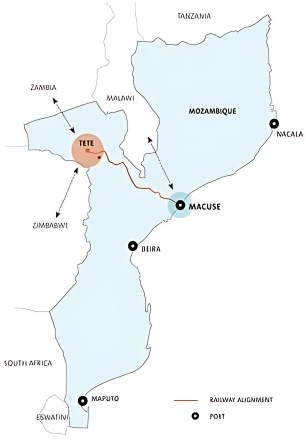
The Macuse corridor project, strategically positioned in Mozambique, presents a unique investment opportunity. Designed to provide a direct route for coal transportation from the landlocked Tete province to the Macuse port without crossing international borders, this initiative has been further optimised by incorporating return cargo facilities. This inclusion opens the corridor for international markets, connecting them to the resource-rich Tete province and the extensive Copper Belt, thereby enhancing trade opportunities and economic development in the region.
 Project Overview
The project encompasses two primary concessions: the rail corridor and the new port at Macuse. This holistic approach ensures a seamless, efficient transportation network from mine to port. The Macuse port stands out as a viable stand-alone project, courtesy of its excellent connectivity via road to Malawi and Zambia, amplifying its strategic importance. Macuse Port, located in Zambezia Province near Macuse and Supinho village, will be connected to the Tete Province by a railway extending from Macuse Port to Chitima near the Zambia/Zimbabwe border.
Port Facilities and Technical Highlights
The port is divided into two main areas, the North Bank and South Bank, each offering specialised terminals and services:
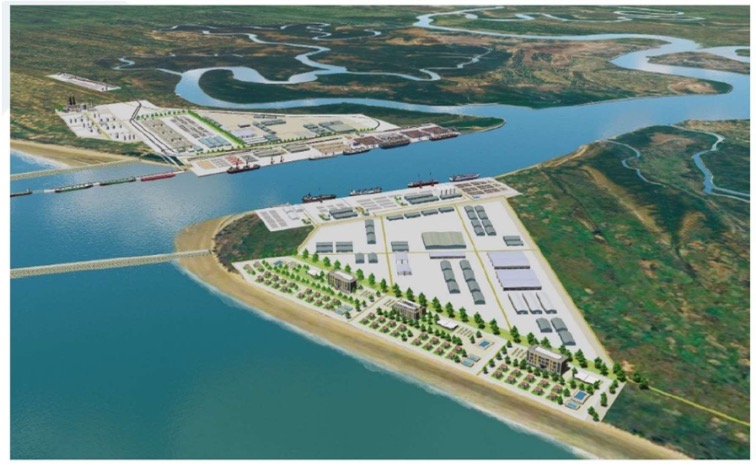
North Bank features a Container terminal, Fish terminal (including cold warehousing and processing facilities), an Industrial and Logistics Park, Real Estate Development Zone, Vehicles terminal, Offshore Supply Base, and a General and Project Cargo terminal.
South Bank hosts a multipurpose bulk terminal with train access servicing the Tete region in Mozambique, handling commodities such as iron ore, copper, clinker, cement, woodchips, fertiliser, and grain, along with a coking coal terminal, a fuel and liquid bulk terminal, and a Logistics Services Park.
Technical specifications highlight the port’s deep sea capability with up to 16 meters of water depth, over 3 km of deep-water quay length, and a vast development area of 1,100 hectares. These features are complemented by a variety of plot sizes for dedicated terminals and businesses, ensuring flexibility and scalability for investors.
Port Assets and Operational Highlights
The port boasts direct and favourable road connections to Malawi and Zambia, covering a total hinterland of 1 million km² with a population of approximately 50 million. The development of a Special Economic Zone, alongside a ferry service linking the North and South banks, underlines the strategic positioning in the heart of Mozambique.
Operational efficiencies are ensured through a local gas-fired power plant, providing a reliable power supply, and the availability of a skilled workforce from nearby Quelimane. The port’s design includes sheltering by breakwaters, mitigating downtime caused by waves, world-class marine services for safe navigation and mooring, and comprehensive repair and maintenance facilities for vessels, trucks, and trains.